
About
World War I (1914-1918)
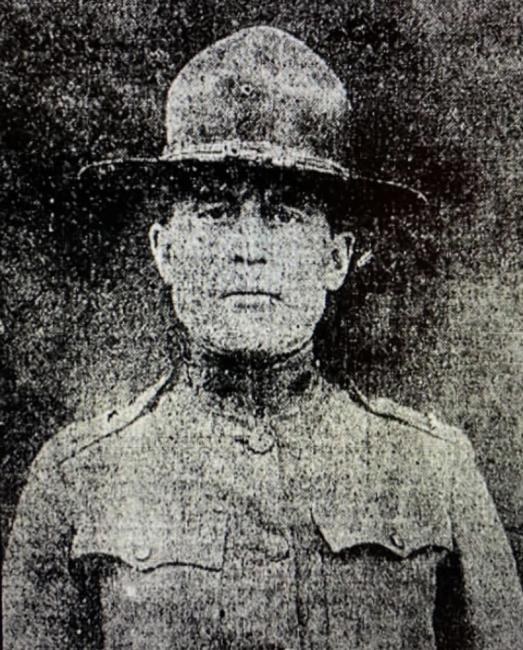
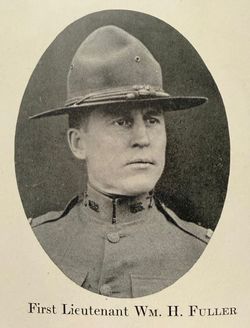
William Henry Fuller was born in Schenectady, New York, on December 1, 1877. He grew up in the city of Schenectady and went to local schools. Before entering the military, he worked as a blacksmith for General Electric.
William enlisted in the United States Army and served for seventeen years with Company F, 105th Infantry Regiment, 27th Infantry Division. On August 9, 1918, William was killed on the Flanders front, leaving behind a wife and five children. He is buried in Vale Cemetery in Schenectady, New York.
*First Lieutenant
Sources: The Schenectady Gazette, Find A Grave, Ancestry
The Schenectady Gazette, November 15, 1918, Page 9
"He was a man's man all through, a fine soldier and an ideal leader of men, well liked by his superiors and greatly loved by all whom he was leader of," is the opinion of the comrades of the late Lieutenant William H. Fuller, says the following letter from Private Charles Lawyer of a machine gun company of the 105th infantry:
"I have just received a letter from home saying that you wished to know the details of the lieutenant's death. Although you probably know by this time, I will again relate the circumstances of that terrible night as I have learned them from the members of Company F.
On the night of August 9, Mr. Fuller had just been in the front line giving his men courage and cheering them up. He made the complete rounds and was with the men for several hours.
He was accompanied by a sergeant who told him to go back, to his dugout; that everything was all right. But the lieutenant insisted on staying with the men and stopped in a small bivouac (a sheet-iron covered trench). He was there a short time giving advice and good cheer to the men, when a German minenwerfer landed direct on the bivouac. He died instantly and suffered no pain.
He was taken from the lines to a little town named Abeele in Belgium and received a good Christian burial with military honors. Although I was quite close to the place I did not know of the unfortunate happening until we were relieved and were out on rest. I immediately looked for his last resting place, which is in a quiet spot far from the lines.
Mr. Fuller was the idol of his men and they were very much depressed on losing their leader and pal. He was more like a father than an officer to the men, and all wish to express their deepest sympathy to you and the children. He died bravely, a martyr to his men and country, and left a place in Company F that no one can ever fill.
I gathered what few flowers I could find in desolated Belgium and decorated the lieutenant's peaceful resting place. Mr. Fuller and I were very good pals and we had a long talk every time we met. He was a man's man all through, a fine soldier and an ideal leader of men, greatly loved by his superiors and his men."